Showing posts with label Bollywood song review. Show all posts

Saturday, 18 March 2017

Babuji Dheere Chalna


The list of songs sung by Geeta Dutt can never be complete without “Babuji Dheere Chalna”  1/8 songs from the film “Aar Paar” that belonged to a genre of crime. This romantic song is inspired partly by “Quizas, Quizas, Quizas” a popular song by Cuban writer Osvaldo Farres. Believed to be translated from Spanish to English by Jennifer Lopez, “Perhaps, perhaps, perhaps” was popularized by Doris Day. (Another source claims Lyrics for English song were penned by Joe Davis). The originality of lyrics penned by Majrooh Sultanpuri leaves no room for doubt.


You may listen to the song here
Picturised on Shakila, the refreshing voice of Geeta Dutt rings in our ears through this song and remains a rage with the audience, young and old to this day.
Geeta Dutt started her playback singing career at the age of sixteen in the movie Bhakta Prahlad (1946) where she sang just two lines for a song. Her lovely, versatile voice tasted its first success in Bollywood with the song “Mera sundar sapna beet gaya” (Do Bhai 1947). History tells the rest of her success story. Her repertoire of songs range from sad, serious, soulful numbers to bhajans and ballads, not to miss her foray in fun n frothy numbers too.
Choreographed by Gurudutt himself and cinematographed by V K Murthy,  Shakila, a dancer in this film and quite “fast” at that, tells Kalu (played by Guru Dutt), her beau  “Sir,go slow…” . While dancing to the tunes of O P Nayyar voiced by Geeta Dutt, smoking the smoke from onlookers at the club, she tries to woo her fancy Kalu. Delicate are the ways of fate and strange are the ways of life sings Shakila to Kalu. And is Kalu, the bachelor, while munching nuts all through the song, mindful of his many adversaries? Shakila shoots him this poser.  
Film: Aar Paar (1954)       Director: Guru Dutt         Music Composer: O P Nayyar
Lyrics: Majrooh Sultanpuri           Singer: Geeta Dutt          Actors:  Johnny Walker, Shyama, Shakila, Jagdeep, Jagdish Sethi

Reviews of few other songs can be reached via Bollywood Songs Review

Image Link:

https://blogger.googleusercontent.com/img/b/R29vZ2xl/AVvXsEiT2Mvc1O3ii1Qt3DErzWcOP9z98TMg5LwC2am9eCSUqOWTn2fK4RM9KsIxw3NrPXsesudhAfK4HtZ-DsVMLkOPRAkszbZkcUT5bybn2dngbqp_AHLwKtTgXNMvCHy36vEpn4pFEEBJjaw/s1600/Babuji+Dheere+Chalna+Mp3+Song.jpg

Deewana Hua Badal (Duet)


Image Link: https://mrandmrs55.files.wordpress.com/2012/06/sharmila-tagore-and-shammi-kapoor-kashmir-ki-kali-dal-lake.jpg


Song that sings a saga of love, shot in the cool locales of “Paradise on Earth” - Kashmir and wrapped beautifully by the melodies of M Rafi and Asha Bhosle. This romantic buoyant ballad is picturized on the flamboyant Shammi Kapoor and gorgeous Sharmila Tagore (who made a stunning debut ) sailing us to Dal Lake in Srinagar, taking us to Nehru Park where we watch Shammi waltzing and jiving to woo Sharmila even as they are sailing in separate boats in the lake.
The song begins with Sharmila climbing down the outside entrance stairs of a Village Inn followed by Shammi in his typical somersaultish style. Truly a treat to watch Shammi’s great balancing act during boating! Some cool moments ensue for a few minutes and the song ends with Shammi waving away to Sharmila from his own boat. Bubbly lively feel is a true takeaway from this timeless melody.


Movie Masala:
Since this was Sharmila’s debut film and also being a Bengali, she had no idea what to do with playback songs. It was Shammi Kapoor who told her what to do during a song, teaching her about music and rhythm (as told by Sharmila in “The Telegraph” Aug 15, 2011)
In Rafi’s voice lies the voice of Shammi so much so that on the musical maestro’s demise, Shammi himself said (somewhere I’ve read) “My voice has departed”
This movie – Kashmir ki Kali became a Box Office hit that year. The film incidentally has no title track.
O P Nayyar was selected to compose the music in place of Shanker-Jaikishen.

This is 1/9 songs from
Film: Kashmir Ki Kali (1964)
Director: Shakti Samanta
Music Composer:  O. P. Nayyar
Lyrics: S.H. Bihari
Picturised on: Shammi Kapoor and Sharmila Tagore
Singers: Mohd Rafi and Asha Bhosle

Few other songs reviewed in this blog can be reached via Bollywood Songs Review


Rahen na Rahen Hum

My sketch of Suchitra Sen
How heartbreaking it is to lose a loved one…isn’t it? I mean not about losing loved one’s life, that’s a different saga altogether. What when circumstances separate a person to be physically nowhere near proximity, but far away from his/her dear celebrity? Instances like these may be common to many, but expressions of feelings are indeed unique to each. So when poor Devyani (played by Suchitra Sen) is separated from her dearie, wealthy Monish Rai (played by Ashok Kumar) who has to travel abroad for higher education, what has this gentle beauty Suchitra got to sing through her song? Must listen at (youtube link)…. while you read my take of her philosophy right here.

As you read, do listen to the song  Here

The magic of film Mamta lies in this song “Rahen na Rahen Hum” that’s backed by tingy tongy chimey tunes that ding n dong every now n then, sweetly supporting the gentle melodies of Lata singing away musings of Suchitra. The sounds of ringing during singing as if from a bell in a temple takes the listener to a plane of purity and divinity (Is this a precursor to prove future tawaif’s chastity - an attempt to tempt one to ponder… I just wonder!). Suchitra when asked to sing this song by Ashok Kumar even as he verbally vows his loyalty to her despite his decisively compelled separation, she too pledges her fealty philosophically. So deeply lost in love, she knows not about separation from unity. Come what may the weather, Spring or Summer, and the fragrance, be it like a breeze or a flower, the garden of their life, she promises to grace devotedly with colour. Lost in the realm of love, she sings that she shall sway and she shall blossom just so to remain forever his bosom. On his return, she is not sure of her presence (rahen na rahen hum – whether or not I’ll be here) yet her fond hope of him returning, one can sense when she sings “wahi pe kahin hum tumse milenge” - there somewhere we shall meet again! This line in particular is so synonymously in sync with “Kabhi Alvida Na Kehna”.  Hai na bolo?
     

1/7 songs from the Film: Mamta (1966) 
Music Composer: Roshan           
Singers: Lata Mangeshkar (solo)
              Mohd Rafi & Suman Kalyanpuri (duet)
Director: Asit Sen                            
Cast: Suchitra Sen, Ashok Kumar, Dharmendra
Lyricist: Majrooh Sultanpuri        

Movie Masala:
Suchitra Sen, born as Roma Dasgupta, refered to as “Mahanayika” in Bengali film world is one actress who with just 7 Hindi films under her belt made the shortest foray in Bollywood mainstream yet sealed her signature that lasts till date. She came (in 1951), she conquered with atleast3 unforgettable films (Gulzar’s Aandhi, Asit Sen’s Mamta and Bimal Roy’s Devdas) and walked away (in 1978) deep down only to get lost in the world of spiritualism.


Image Link:
https://www.google.co.in/imgres?imgurl=https%3A%2F%2Fmrandmrs55.files.wordpress.com%2F2013%2F04%2Frahe5.jpg%3Fw%3D600&imgrefurl=https%3A%2F%2Fmrandmrs55.com%2Ftag%2Fsuchitra-sen%2F&docid=K2nTDkiAOp6LeM&tbnid=6UZxX6mJZrBWIM%3A&vet=10ahUKEwj37Nqi463VAhVLuY8KHWQDCXMQMwhVKCcwJw..i&w=472&h=351&bih=698&biw=1422&q=suchitra%20sen%20ashok%20kumar%20mamtha%20movie%201966&ved=0ahUKEwj37Nqi463VAhVLuY8KHWQDCXMQMwhVKCcwJw&iact=mrc&uact=8

Mang Ke Saath Tumhara (Duet)

Can you imagine a race between a bus and a tonga? Yes, it can happen… in dreams and in films. Undeniably unbelievable that the clear winner can be…The Tonga!! but not until one watches the film Naya Daur (1957), a film that ushered in a “Naya Daur” - New Era for the careers of many in the industry.

This classic entertaining film and the second highest grosser of that era is about Man vs. Machine, with a clear social message conveying the victory of human spirit and belief riding over technology, clearly the result of a storyline with a difference!  Songs (9 in all) from this film were inspired by the music of a Punjabi troupe who had performed at the 25th week celebrations of B. R. Chopra’s another film “Ek Hi Raasta” (1956).


Clip-Clop Clip-Clop … Tuk-Tok Tuk-Tok ….
“Maang Ke Saath Tumhara” a typical tonga song was shot probably on a cool, breezy early evening on pure countryside locales of Bhopal (and not in Mumbai studio! bringing in realism to the story). The song begins with the beats of tonga…signature sound style of OPNji, Dilip Kumar enjoying his tonga ride in the company of Vyjayanthimala. The stunning effect of light and shade, all of foliage playing on their faces, especially after the start of the song, appear in perfect rhythm with the tonga beats. Gentle movements of Dilip and Vyjayanthimala (their hairs included!) matching with the mood and music, swaying with the breeze and the beats are a treat as visuals. Childish charm of a typical village boy essayed by Dilip dressed in simple clothes gets amplified with that typical teeny scream of his Urrrrhhhh…yaaaaaaaaah at the end of the song. 
Whatta joy to “watch” the song while you listen.


Film: Naya Daur (1957)                  
Director and Producer: B R Chopra          
Music Composer: O P Nayyar
Lyrics: Sahir Ludhiyanvi                 
Singers: Rafi and Asha                   

Actors: Dilip Kumar and Vyjayanthimala

Reviews of few other songs in this blog can be reached via Bollywood Songs Review


Surmayi Akhiyon Mein


My sketch of Kamal Hasan

A touching song from the film Sadma that states a sad story of showering uncondtiional love only to lose all at the end of it all. Relationship between Kamal Hasan (in the role of Somu, a school teacher) and Sridevi (in the role of Reshmi , trapped in a brothel, later however rescued by Somu) is clearly one of a cusp caught between affection and love.  Kamal is so warmly and affectionately called as Somu by Sridevi while with him during her recovery from amnesia. And once her memory is revived he is so coolly and coldly ditched by her, at the climax of the movie. What an anticlimax this must have been for the heartbroken Kamal! Little wonder that the result of a stellar above par performance of Sridevi-Kamal Hasan pair not only made it to CNN-IBN’s list of “Greatest Romantic Couples on Celluloid” but Kamal’s astounding performance sans many sounds (his brilliant expressions said it all) helped the climax of Sadma clinch into CNN-IBN list of “Bollywood’s 50 most memorable scenes of all time”.
In the song, Somu begs Reshmi to leave a sweet little dream for him, to send him a soul to whom he can cling Halka pulka shabnami, resham se bhi reshami….sings the saddened Somu.  Grant a dream – Yes, Reshmi did. Did it turn true for Somu? Alas, it didn’t!
close. Soul that may be a bit unknown, yet, that makes him feel like someone known. “Silken soft like morning dew, light as the feather that flew” …
That’s the tragedy of this sad though soulstirring story!!
You can listen to the song right here!

This is 1/6 songs from
Film: Sadma (1983) Director: Balu Mahendra     
Music Composer: Ilaiyaaraaja   
Lyrics: Gulzar
Singer: Yesudas                              
Actors: Kamal Haasan, Sridevi

Image Source:
https://www.google.co.in/imgres?imgurl=https%3A%2F%2Fi.ytimg.com%2Fvi%2FV5qMS-K8eYY%2Fmaxresdefault.jpg&imgrefurl=https%3A%2F%2Fwww.youtube.com%2Fwatch%3Fv%3DV5qMS-K8eYY&docid=9oxMnA25F9mhcM&tbnid=nu8_4rocrLO2oM%3A&vet=10ahUKEwj7lL6G6eTVAhVKQo8KHa-KBs0QMwgkKAAwAA..i&w=1280&h=720&bih=698&biw=1422&q=surmayi%20akhiyon%20mein&ved=0ahUKEwj7lL6G6eTVAhVKQo8KHa-KBs0QMwgkKAAwAA&iact=mrc&uact=8


Nainon Mein Badra Chayye

My Sketch of Madan Mohan Kohli
More of my portraits can be viewed at http://mangalaspotpourri.blogspot.in/2017/03/portraits.html

My sketch of Lata Mangeshkar
While you read this song review below enjoy listening to it on YouTube Link Nainon Mein Badra Chayye
One of a kind film where the heroine meets death barely few minutes after its start. What else can ensue if not those run of the mill expectations: A somber saga spinning off interspersed with sad songs filling spaces in between….right? Proving viewers wrong and belying their usual expectations to present a pleasanter film is the unusual director Raj Khosla stunning all with his masterpiece:  film with a unique theme, loaded with sensible suspense, classic romance beautified in classical style, thereby Khosla flaunting flashes of a splendid love story, not to miss the magic of mesmerizing music by Madan Mohan.
Set amidst expansive outdoors around the palatial and picturesque Lake View of Udaipur, this song from the
1966 film Mere Saaya (meaning “My Shadow “ and a remake of Marathi film “Pathlaag”) starts with the affluent descendant of the royal family, lawyer Thakur Rakesh Singh (Sunil Dutt) mentally not one bit at ease with himself though physically appears relaxed, stretched out and smoking away, laid back on a chaise lounge ….but not for long, since the so far still though pensive mind with a cigar in hand is now stirred by the gentle tunes of a sitar and santoor combine, a jawbreaking  jugalbandi  setting tone for a classic ghazal of a song composed by Madan Mohanji, sung with gusto by Lataji playbacking for the female actress of fame who brought to fashion, fringe haircut and tight churidar kurta…guess who…yesss ...the one and only Charming Sadhana.
Sadhana, in this song, while clearly craving for Dutt’s love, makes no bones about singing the same to him “Prem deewani hoon mein”.  Introducing herself as his Queen of Dreams from a previous lifetime (“sapnon ki raani hoon mein” “pichale janam se teree”), she pleads with him to make her his’s in this lifetime too (“aa is janam mein bhi tu”).
A song that shows Dutt reminiscing one of many spurts of blissful moments he had with Sadhana , one that evokes evidence of his enigmatic state,  one that lets viewers’minds soak in the views of the resplendent lake and environs of Lake Palace, Udaipur as much as their misty eyes soak in desparate Dutt’s saga of desolation.
This is 1/6 songs from
Film: Mera Saaya (1966)              
Director: Raj Khosla        
Music Director: Madan Mohan
Lyrics: Raja Mehdi Ali Khan         
Singer: Lata Mangeshkar
Cast: Sunil Dutt, Sadhana

Few other songs reviewed in this blog can be reached via Bollywood Songs Review

Image Link
https://www.google.co.in/imgres?imgurl=https%3A%2F%2Fi.ytimg.com%2Fvi%2F66chtB-ygrw%2Fmaxresdefault.jpg&imgrefurl=https%3A%2F%2Fwww.youtube.com%2Fwatch%3Fv%3D66chtB-ygrw&docid=3YN6y-OPUVoUnM&tbnid=tU8yHBm7NeeqDM%3A&vet=10ahUKEwjvraXD6NXUAhWLpo8KHXnaAPoQMwgnKAMwAw..i&w=1280&h=720&bih=698&biw=1422&q=nainon%20mein%20badra%20chhaye&ved=0ahUKEwjvraXD6NXUAhWLpo8KHXnaAPoQMwgnKAMwAw&iact=mrc&uact=8#h=720&imgdii=CsXaB20oM7GPWM:&vet=10ahUKEwjvraXD6NXUAhWLpo8KHXnaAPoQMwgnKAMwAw..i&w=1280


Aao Huzoor Tum ko


1/5 songs from the 1968 film “Kismat”
Music Director: O.P. Nayyar        Singer: Asha Bhosle        Lyricist: Noor Devasi
Director: Manmohan Desai          Actors: Biswajeet, Babita, Helen, Kamal Mishra, Murad
Based on the film Kismat, a film with a flamboyant narrative and an unending storyline.

A sharaab song associating a drunkard, but with a difference! Difference that lies in the gender. I can guess the difference, can you? In sharp contrast to the practice during those times, when consuming the Devil’s nectar was the prerogative of masculine masses, Manmohan Desai takes a bold step to defy the norms and portray feminine intoxification to the public. Thanks to the lyrics of a lesser known lyricist Noor Devasi who takes us along with the stars of the song, to stars of the skies…
Good Heavens!...seven of them towards the end of the song ! when he refers to jotting down in the heart, memoirs that are unmatched by seven skies (Jis ki misaal de naa sake saatho aasmaan). Rave references to skies, stars and seven heavens…all of these…are they probably implying divinity? So what if the lyricist is lesser known, when the song is considered a memorable one (especially associating Babita), entertaining to us, viewers cum listeners and a claim to fame for Noor Dewasi.
Fabulous rendition by Asha…what an intoxicating mood she must have been in! Glory be to her, for her pauses, expressions and extensions, all so precise and perfectly in sync with the drunken dolly ….is it Karishma or Kareena? Ta…ta…taa it’s the mom of both, Babita.
This song , picturised on Babita and Biswajit was one of the songs selected for Shaan-e-Pakistan 2015 (a 3 day fashion and cultural fiesta that brings the 2 nations together through fashion, food and music)

Few other song reviews in this blog can be reached via "Bollywood Songs Review"

Image Link
https://www.google.co.in/imgres?imgurl=http%3A%2F%2Fs1.dmcdn.net%2FJnJ_V%2F1280x720-wcn.jpg&imgrefurl=http%3A%2F%2Fwww.dailymotion.com%2Fvideo%2Fx2kqqaq&docid=8BOguKGfR5a3oM&tbnid=z08GHlyL4vV2LM%3A&vet=1&w=1280&h=720&bih=698&biw=1422&ved=0ahUKEwj93oyH1c_QAhVGwI8KHTzlBN0QMwgnKAswCw&iact=mrc&uact=8


Tere Mere Milan Ki Yeh Raina

My debut portrait - Lata Mangeshkar

My sketch of Jaya Bhaduri
More of my portraits can be viewed @ "My Portraits"

Tere Mere Milan ki Yeh Raina YouTube Link


Music can move people, melt them or even tear them apart. Music can reunite them too! That’s The Mesmerising Magic of Music!! So evident is this in the fondly remembered film Abhimaan (declared Hit by Trade Guide – a Bollywood Trade magazine published during those times), with a mature love story that deals with a very common human trait called “Professional Jealousy” between married couple. Here the singer-husband finds it difficult to accept the popularity and mass appeal of his singer-wife. Their marriage is on the rocks. The movie reaches its climax when the couple Subir (Amitabh) and Uma (Jaya  -Bhaduri then, Bachchan now) get separated, Uma has a miscarriage and finally they fortunately reunite – what an emotional reunion celebrated with this beauty of a song “Tere Mere Milan Ki Yeh Raina” rendered in public by both, thanks to timely intervention by Brijeshwar Rai (that’s David for us) who declares to the on-screen audience that it was music that brought them together, tore them apart and reuniting them now. It was Music that defined (or designed!) their life all the way!
This show stopping musical glitters right from the start when Amitabh opens the stanza with a hmmm... and the couple glance by turns at each other. Simple yet stunning sight that sinks into our souls!  And as Amitabh continues to sing, Jaya is unable to take her eyes off him, her emotions go beyond control and ultimately breaks down even as their good times with each other flashback at her. Amitabh along with Asrani (as Chander) waste no time in consoling Jaya , David announcing to the audience that it was the couple’s dream that they should be singing this song together and also requesting Jaya to join Amitabh in the song. When Jaya refuses, it was David’s touching statement that it is his command just like that of a father to daughter, which makes Jaya give her consent.
Amitabh lovingly beckons her to the stage which she readily does, albeit welled with tears. From here on we witness “The Magic of Music” where they both take turns in singing their stanzas. How can one miss Brijeshwar Rai brimming with joy when the two sing in chorus “Dekho naa….” And how can we the audience miss joining him in that joy!
A truly touching direction by SDB….the duo turning towards each other with every repeat of Dekho naa….as if reminding each other of their good times once upon a time! The song ending with their duet rightfully proclaims “Their Grand Emotional Reunion”.

Trivia:
Bindu’s  positive role comes as a good break, earlier known for her vamp/cabaret dancer roles (Zanjeer -1973)
Jaya won the Filmfare Best Actress Award for her sterling acting performance wherein she proves that this innocent country girl in her is indeed a woman of substance.
Tune of the song is believed to be based on Rabindra Sangeet “Jodi  Taare Naayi Chini Go Seki”
S D Burman won the Fimfare Best Music Director Award for his brilliant music in this movie.
This song was listed at No. 16 on Binaca Geetmala annual list 1973
Abhimaan was a blockbuster not just in India but also in Sri Lanka where it was screened non stop for 590 days at Empire Colombo.
The film is claimed to be based roughly around the life story of popular playback singer Kishore Kumar with his first wife Ruma Guha Thakurta/Ruma Ghosh.

Film: Abhimaan (1973)  
Director: Hrishikesh Mukherjee                               
Music Composer: S D Burman
Lyrics: Majrooh Sultanpuri          
Singers: Kishore Kumar, Lata Mangeshkar           
Actors:  Amitabh Bachchan, Jaya Bhaduri, David, Asrani, Bindu and others

Few other song reviews in this blog can be reached via "Bollywood Songs Review"

Image Link:
https://www.google.co.in/search?q=tere+mere+milan+ki+yeh+raina&tbm=isch&tbs=rimg:CXDdXNNm1V5oIjhrP4t1CYNA_10hTXiP607ck6A6Nk3pfzIRB4vpCKPABLqDmYqU9lVzbDfRyrOMuEs8qZlj78COJ3SoSCWs_1i3UJg0D_1EaIeOiL6PsCbKhIJSFNeI_1rTtyQR5jdIg6LOb0UqEgnoDo2Tel_1MhBEgEo4Zi6HHESoSCUHi-kIo8AEuEfo7o5BiLtIqKhIJoOZipT2VXNsRJYNwRsuFidMqEgkN9HKs4y4SzxEV_1gjzyf_16OyoSCSpmWPvwI4ndEU0Z7gTKqu3e&tbo=u&sa=X&ved=0ahUKEwjpkpKhvZnRAhVHLI8KHYYkCicQ9C8ICQ&biw=1422&bih=698&dpr=0.9#imgrc=KmZY-_Ajid0KYM%3A


Yeh Raatein Yeh Mausam


My sketch of Nutan - Charcoal on Paper
My portraits of Bollywood legends can be viewed @ "Portraits - Legends of Bollywood"

Dilli Ka Thug, is a 1958 comedy film that is remembered to this day for its enchanting music (by Composer Ravi) with melodious tunes complemented equally richly by Majrooh’s lyrics.
Kishore (Kishore Kumar), a journalist turned gambler, tricks people for his earning.  On landing in Mumbai with a job in hand, he meets Asha (Nutan). The firm employing Kishore is run by Asha’s uncle, murderer of Kishore’s father and his friend. This uncle of Asha, Professor Amarnath by day is also known by the name Anantram, leader of a gang that distributes fake medicines. Kishore, engaged to Asha during childhood, but never met each other in their later years, now tries to win her back.
You may listen to the song here
It takes two to Tango goes a saying. So it was, sort of, in this waltzish song that starts with two -
Kishore and Nutan, not in a ballroom but on the terrace . The hitherto angry outward air of Nutan that preluded this song melts in less than a minute when Kishore repeats his first line “Yeh raatein yeh mausam….with arms wide open. Is it to invoke the night breeze on to the terrace or evoke Nutan into his arms for an embrace?  Why not take it as both when the feelings are same – pristine pure akin to nature.
The magic unfolds when Nutan springs a surprise. Hmmm she takes over humming the tune and singing a melody wherein she states about their hearts having said “We shall never part”. While she sings her say, one can’t miss noticing her palms feel the gentle sway of the leaves of palms to the blows of breeze. What follows next is justifiably their chorus “Yeh Raatein Yeh Mausam…..” praising the night and the clime, shine from the moon and breeze from the shore, all of these making them feel…well, at ease together, in love with each other. What a sea of emotions expressed in just a line! Woohoo, thanks to lyricist Majrooh.
They move on to sing rest of the song taking turns whilst they join back in chorus to sing the couplet
Kaha do dilon ne, yeh milkar kabhi ham, na honge judaa
Yeh raatein, yeh mausam, nadi ka kinara, yeh chanchal hawa”
The emotions of both have been strongly captured in the song, thanks to brilliant picturisation.  Nutan’s mesmerising portrayal of emotions, in particular, is evident in this breezy musical. Is this why she is popular as the “Queen of Emotions” I wonder!
1/8 songs from the Film: Dilli ka Thug (1958)                        
Music Composer:  Ravi                 
Singers: Kishore Kumar, Asha Bhonsle   
Director: S D Narang      
Cast: Kishore Kumar, Nutan, Madan Puri, Iftekhar
Lyricist: S H Bihari, Shailendra, Majrooh Sultanpuri

Movie Masala:
It is believed that there was a joke in film industry that if you want to draw Nutan, just sketch a straight line. But the joke was shortlived, for, at 17, she was sent by her mother to a finishing school in Switzerland after which she gained a few pounds more!

Few other song reviews in this blog can be reached via "Bollywood Songs Review"

Image Link: https://i.ytimg.com/vi/fpka_b4Hlas/hqdefault.jpg


Jaaiye Aap Kahaan


1 of 9 songs from the film “Mere Sanam” which is believed to be an unofficial remake of “Come September” (especially the first part of the film where the caretaker converts the bungalow to a resort). Storyline is similar in many ways to “Thumsa nahin dekha”.  The story revolves around romantic rendezvous between college girl Neena (Asha Parekh) and Kumar (Biswajeet) another guest in the same lodge where Neena went on a holiday with her mother and a few other female friends.
You may listen to the song here
A mediocre film with a run of the mill story yet makes audience glued to their seats thanks to “Rok lengi koyi daali meri baahon ki tarah”
mesmerizing music by a colossus called O P Nayyar and brilliant photography by K. Vaikunth that portrays Kashmir in all its glory. Jaaiye Aap Kahan is one of those classic songs regarded as a milestone in Hindi film music. A typical trotting around the tree song (and not running around the tree, atleast in this case) picturized on Asha Parekh and Biswajeet with the tree triumphantly playing the supporting role of wingman. Even the twig tweaks out radiating towards the centre of circlish sky background lending itself for Asha P to hold on to…Observe this while Asha B sings
It’s grass n greens all through the song, of those trees, lawns n more of them, the sky and the earth, clouds and hills coming in between bringing viewers to perspective, pushing them towards a picturesque panorama . While the song starts with the humming of “aha” by Biswajeet (as if he is set to sing the rest of the song!) it is Asha (Parekh)  all the way playbacked brilliantly by Asha (Bhosle) ending with the dazzling pair getting lost in the woods, hand in hand, hmmming….even as the devious manager Shyam (played by Pran) who is plotting to create a wedge between the two, manages to catch sight of the duo’s dalliance!

Film: Mere Sanam (1965)             
Director: Amar Kumar   
Music Composer: O P Nayyar
Lyrics: Majrooh Sultanpuri          
Singer: Asha Bhosle       
Actors:  Asha Parekh, Biswajeet, Pran, Rajendranath, Mumtaz

 Image Link: https://s2-ssl.dmcdn.net/Eup6I/526x297-ABU.jpg


Aage Bhi Jaanena Tu


1/8 songs from the film Waqt (1965) that set the trend for an ensemble cast with Yash Chopra designing a template to be typified in films to come. Another lost and found mega sized family story with a typical fabulous 60s’ Hindi cinema ending: HAPPY. Women in the film, the inimitable mom Achala Sachdev and the leading ladies Sadhana and Sharmila Tagore are portrayed brilliantly in powerful characters, all of them oozing with confidence and looking stunningly beautiful.
You may listen to the song here
Song that starts on a grand note. Ha…you guessed it right…yes a party song…with Chinoy the host.
Dance floor, bright lights - red and white, star studded scene with fine wine, gorgeous costumes, black suits, svelte and stylish, silken saris, diamond necklaces, not a hair in the air. Phew..what an overview of opulence!!
Somewhere in the middle of the song, Vijay (played by Shashi Kapoor) hears that his mother Laxmi (played by Achala Sachdev) is seriously ill. Vijay, the baby of Kedarnath’s family of 3 sons, is a college graduate and his education was supported by Ma Laxmi’s sheer hard work and years of sacrifice. Every year, Ma cries for Vijay on his birthday, for Vijay (who was Munna when the family was separated) was still a toddler in Ma’s arms. Incidentally, all 3 sons shared the same birthday!
A classic example of “A lot can happen over a song” with plenty to watch, for there’s progress aplenty of the story, while you listen to this one of a clutch of super hit songs.  Soulful song with lyrics centered around philosophy. Not to worry. Sahir doesn’t drive us into depression. It’s all about ‘being in the dark’ about past and the future, hence best is to light up the present, i.e., This Moment. What a coincidence it is! ...for, matching with this meaning is a fleeting moment in the song when the shimmering lady behind the mic is glistening under bright lights while we, the viewers almost lose sight of the rest in the dark. Notice this during the singing of la…la…la….la just before the line “ is pal ki jalwo ne…

 Film: Waqt (1965)          
 Director: Yash Chopra  
 Producer: B R Chopra    
Music Composer: Ravi
Lyrics: Sahir Ludhianvi   
Singer: Asha Bhosle       
Actors: Ensemble Cast
Sunil Dutt, Raaj Kumar, Shashi Kapoor, Sadhana, Balraj Sahni, Madan Puri, Sharmila Tagore, Achala Sachdev, Rehman

Image Link: https://s2-ssl.dmcdn.net/Eup6I/526x297-ABU.jpg

Mora Gora Ang Laile


This song tells a tale of a young man Sampooran Singh Kalra pen named Gulzar who shot his name to fame,
from obscurity to celebrity via serendipity.
On landing in Mumbai, Gulzar went through tough times to survive. He worked as a car mechanic at Worli in Mumbai. However since his heart remained in writing destiny enabled him to return to his calling. What a joy it must have been for Gulzar when he got a call from Bimal Roy, right? Wrong! Guess why… adamant about his aversion to Bollywood, answer from Gulzar when asked by Bimal Roy to pen a song for his film Bandini was an assertive “Nnnno I don’t want to be a lyricist!” Yet, once Gulzar relented, there was no looking back.

A happy smiley charm of a song from a rare woman centric melancholic film that tells a tragic tale from
“her”point of view. Sung for a lady in love (picturized on Nutan) who plans to clandestinely meet her lover, the song has utterly simple lyrics penned by Gulzar, the Czar of Bollywood Song Scripts. In today’s world intoxicated by anything in the air that looks fair, Gulzar opts to take the road less travelled. His innovative mind thinks of this fair lady wishing to look darker just so she can make her wish come true by merging with the darkness of the night to meet her lover sans anyone’s sight. Propping up his innovative thinking is the prelude to the song by Director Bimal Roy about a tiny tale of Lord Krishna. Radha wishes that her fair skin turns dark which can merge into the darkness of night so that she can surreptitiously meet her favourite Lord Krishna without anyone’s notice. Ditto is Nutan here, probably a fan of fantasy, idolizing Radha.
What a wonder, this creation, Gulzar drawing his lines for lyrics from culture and mythology that is so very Indian, magical melody mused out by Lata Mangeshkar as directed by S D Burman perfectly matching with the pristine beauty of Nutan.
Lyricist Shailendra during the filming of Bandini got into an argument with S D Burman and decided not to work anymore in the film. He instead suggested that Gulzar pen the remaining song (and not songs)….for there was just one song left. Thus came into Bollywood fora, the magic of Gulzar called Mora Gora….


Movie Masala
Bandini - Landmark movie of 1960s
Last feature film with Bimal Roy as Director
Swept six awards in that year’s Fimfare Awards that included Best Film, Best Director and Best Actress
Bimal Roy was about to scrap the film when he came to know that Nutan was in the family way. Roy, a professional that he was, however managed to complete the film well before Nutan’s D Day!
While Mora Gora….was Gulzar’s first hit song, his debut in Bollywood was marked by Ganga aaye kahan se, Ganga jaye kahan re (Kabuliwalah)
Gora Mora Ang Laile is 1/7 songs from
Film: Bandini (1963)                     
Lyricist: Gulzar
Music Composer:  S D Burman              
Singer: Lata Mangeshkar
Director: Bimal Roy          


NOSTALGIA – 61st Episode
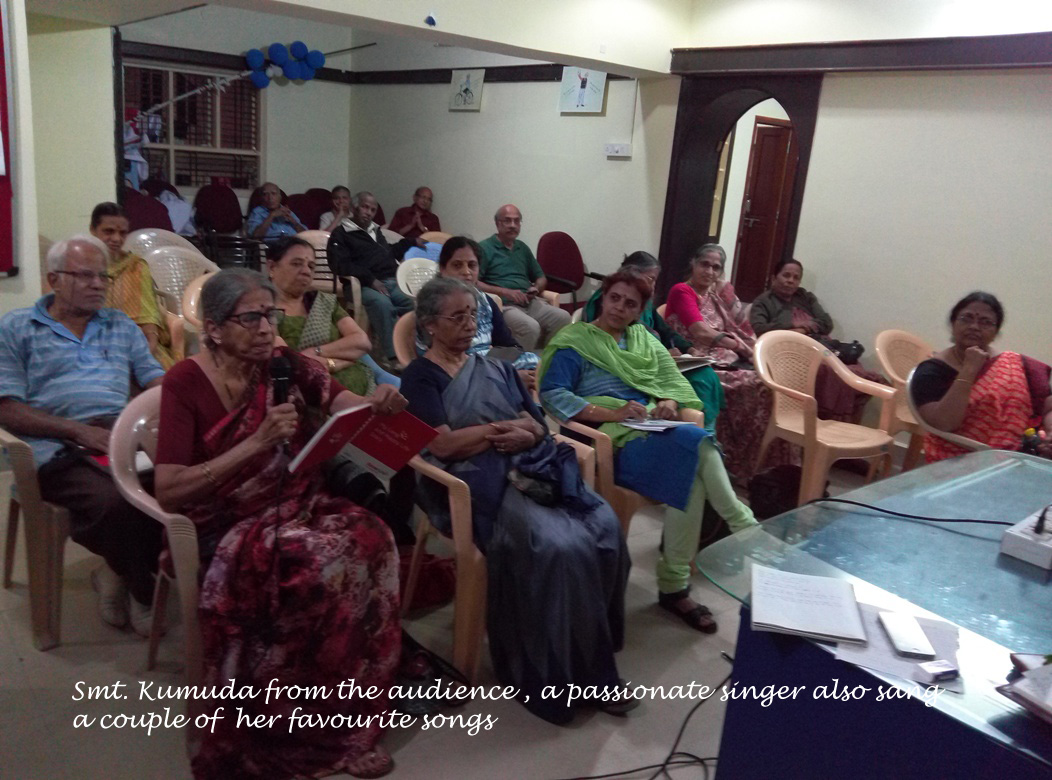
That was a real “Blast from the Past”! True to the theme, Team Nostalgia in this month’s episode at Dignity Foundation - 61st to be precise (yeh…Nostalgia Episode Count too has now joined “Senior Citizens Cadre” J ) trekked the audience down to Musical Melodies of Bollywood Lanes as old as 1950s. Nostalgia began the program by swiftly elevating the mood of the gathering, driving them deep down to a 1950 Prayer number from the movie Nirala “Mehfil mein jal uthi shama” rendered soulfully by Smt. Sudha followed by many more scores from Sheshadri Sir’s playlist. Picked from this playlist for my Song Review was “Mora Gora Ang Laile….” from Shesh Sir’s fave film “Bandini” picturized on Nutan melodiously sung by Smt. Rekha during the program. Song Review can be read at …. . Btw bhai aur behen, last time did you miss viewing my sketch of Helen? Ophh ho….this time then, don’t miss viewing my sketch of Nutan!
Songs that followed reminded us to reminisce the magic makers of Bollywood Yester Era be it The Gift of Bengal to Hindi Cinema - Bimal Roy’s “Mora Gora…..” or “Chod de Saari Duniya” from the black n white masterpiece Saraswathichandra – an out n out Gujarathi novel based movie. Smt. Kumuda from the audience with her beautiful rendering of a rare gem “Dekhta chala gaya main zindgi ki raah main” from the thriller cum comic film “Gateway of India” truly gushed out the floodgates of DF senior citizens’ fond memories to as early as 1950s. The pristine voice of Lata in the song “Guzra Hua Zamana” sung by Smt. Sudha with her voice so sublime tempted even a tiny boy (clad in red - can be viewed in pics) to lip sync. Oh buoy, imagine a boy not even a 2006 humming a song of 1956! Ain’t it reason enough to tap a pat for Team Nostalgia!?

Nostalgia Songs List – April 19 2017

Solos by Smt. Sudha:
Mehfil mein jal uthi shama – Nirala (1950)
Man Mohana Bhade Jhuthe – Seema(1955)
Guzra Hua Zamana – Shirin Farhad (1956)
Yeh tanhaai hai re hai phir na – Tere Ghar Ke Saamne (1963)
Nigahen Milane Ko Jee Chahta hai – Dil Hi To Hai (1963)
Chhod De Saari Duniya Kisi Ke Liye – Saraswatichandra (1968)

Solos by Smt. Rekha
Main aaj pawan mein paau Ek mithi si chubhan – Reshma aur Shera (1971)
Tere bina jiya jayena – Ghar (1978)
Mora gora ang laile – Bandini (1963)
Ae Ri Pawan Dhundhe Kise Tera Mann – Bemisal (1982)

Female Duets
Kahe tarsaye jiyara – Chitralekha (1964)
Janu janu re chupke kaun aaya – Insan Jaag Utha (1959)

Solos by Smt. Kumuda
Shukirya Ae Pyar Tera – Aaram (1951)
Dekhta chala gaya main zindgi ki raah main – Gateway of India (1957)
Pyar par bas tho nahin hain – Sone ki chidiya (1958)

Duets by Sheshadri Sir and Smt. Rekha
Aa Neele Gagan Tale Pyar – Badshah (1954)


Image link: http://images.mid-day.com/images/2014/jun/14-Bandini.jpg

Tu Pyaar ka Saagar Hai


1/7 songs from the film Seema (1955). A film that screens splendid acting of a simple story portrayed in simpler form. Teenager Gauri (Nutan) orphaned early, treated as unwanted by her Uncle and Aunt, and framed for spurning on being pursued by a lecherous cook where she worked as maid, was finally housed in a reform institution with Ashok (Balraj Sahni), as the kind warden . Irate with the world in general, constant rule breaker taking law into her hands, a frequent fighter in a furious mood, Nutan is slowly but surely reformed, thanks to the gentle, patient, caring, understanding and restrained attitude of Balraj S with whom she starts realizing she is in love…..

Excellent musical scores by Shankar Jaikishen during the pinnacle of their career, complemented by brilliant lyrics by Shailendra and Hasrat Jaipuri was what made Seema, the film a grand success. The masterpiece amongst the scores however is “Tu Pyaar ka Saagar Hai”.

Tu Pyar ka Saagar Hai Youtube link

An intensely emotional, serene and soothing prayer song sung by Prabodh Chandra Dey - Padma Bhushan Manna Dey to music lovers, a singer who could twist his voice to varying tunes be it Indian classical or Western, sad or romantic, playful  or poignant or many others in between. Great combination of lyrics and music makes this a rare song with its own standing, for leaving aside its cinematic context it transcends to stay in the minds of listeners for recurring recall.

When the wheel of fortune (or the wheel of destiny as I call it) in our lives rides against us, driving us to a state of despair, an inevitable recourse one resorts to is divine help in the form of “PRAYER”. (I recall reading somewhere that even a confirmed atheist such as Khushwant Singh is believed to have resorted to those meditation beads when no one was around him!) The depth and intensity of our prayers peak up more so when the prayer is a song such as this, creating a mood such as this, sung by a voice such as his (Manna De’s ) brilliantly backed by lyrics from a lyricist such as Shailendra.

When one listens to the song sans the visuals, it feels as if it is sung in holy environs enveloped by an aura of bright lit lamps, fresh n fragrant flowers and joss sticks all of these in a sense inducing an “incense feel” , thanks to the deep resonant enchanting voice of  Manna De which leaves us in a trance.

 Film: Seema (1955)      
Director: Amiya Chakravarthy    
Music Composer: Shankar Jaikishen
Lyrics: Shailendra            
Singer: Manna Dey         
Actors:  Balraj Sahni, Nutan, Shubha Khote


Sambhal Ye Dil


A deeply touching duet with emphatic though contrasting expressions of feelings of two, Mohan (Sunil Dutt) and Rajni (Vyjayanthimala)
Mohan, a literature professor, who once hired Rajni, a Nautch girl to pose as his fiancĂ©e to console his ailing mother (who wished Mohan be married before she dies) is now pining for her to be with him forever. Rajni, in contrast, is withdrawing herself away, for the shear fear of social stigma linked to her “self”, a dilemma that stared on her face something she dreaded to face! Understable for a lady who frequently fleed unable to bear the mockery by customers (for whom she worked as prostitute).  A reason or two that made them mock: Be it when she dons a dance costume or regales herself royally with bridal sari n such other finery, lovingly gifted to her - considered as “Bahu-to-be” - by her wishfilled Ma -in-law-to-be (Leela Chitnis).
The heart of this song “Sambhal Ye Dil” lies in conversational lyrics of Sahir Ludhianvi so sublimely centered on two selves, Dilip Kumar and Vyjayanthimala who sing their hearts out. Dialogue delivered musically that appears to be happening as if between each other while together, though distanced remotely away from one other.
Vyjayanthimala is portrayed in a typical posture of a human in depressingly dilemmatic state at the start of the song. In stark contrast is Sunil Dutt, right at the door and treading towards the balcony, arms ready to open wide, for Vyj…mala. Ala…watch Sunil’s sincerely smiling face greeting her, all of grace! Diverse yet subtle ways of depicting Rajni’s depressed state are notable through the song….ambling around the room with clenched fists, moist eyes et al. Even as Mohan maintains his cheerful face and heartfelt state right through his last verse when he sings “jo dil ki aakhri hadd hai wahaan tak baat pahunchi hai (my feelings are at the farthest edge of my heart) we too realise we are sitting at the edge of our seats wondering while watching….Unite, they must….yet our thoughts tossing between these two questions…Will they? Won’t they? …Will they? Won’t they?... Will they? Won’t they?


Movie Masaala:
Vyjayanthimala who exploited her dancing skills to the hilt alongside her acting duly won the Best Fimfare Actress Award. So did Mukhram Sharma for his Splendid Story. Vyjayanthimala in the same year was nominated for the biggest hit of her career Bimal Roy’s Madhumati
Sadhna was the fifth highest grossing film of 1958
Sunil Dutt in his role in this film as Professor of Poetry and Literature at a nearby college, during one of his lessons about a nobleman who has fallen for a prostitute, had this to say about dancing girls, “They love not the man, but his assets and money”
Sadhna was a conversational tale with no takers! Hold…. not till B R Chopra grabbed it and did not miss converting it to a big hit!
Vyjayanthimala overtly enamoured by the script her role had to enact on screen is believed to have gifted B R Chopra a plateful of coins! Ever smart at picking up potential roles - Chandramukhi in Devdas when Nargis and Suraiya refused; Rajni in this film when Nimmi (big star of that era) refused BRC’s offer.
Sambhal Ye Dil is 1/7 songs from
Film: Sadhna (1958)        
Director: B R Chopra       Music Director: Datta Naik
Lyrics: Sahir Ludhianvi    Singers: Asha, Rafi           Actors: Sunil Dutt, Vyjayanthimala

Few other songs reviewed in this blog:
Mang ke saath tumhaara
Tu Pyar Ka Saagar Hai
Churaliya Hum Tum Ne Jo Dil Ko
Aao Huzoor Tum Ko
Aayega Aane Waala
Ajeeb Dastaan Hai Yeh

Songs sung by Team Nostalgia at Dignity Foundation on 20th Jan 2017:
Ae maalik tere bande hum - Vasant Desai
Tum aasha vishwas hamare  - Hridayanath
Saranga teri yaad mein - Sardar Malik
Dhalti jaaye raat - Lachiram
Jai jai he jagadambe mata - Chitragupt
Haye jiya roye  - Hansraj Bahl
Hasne ki chahne kitna mujhe rulaya hai  - Kanu Roy
Chanda re ja re ja re – Khemchand Prakash
Tere sur aur mere geet – Vasant Desai
Prabhu tero naam - Jaidev
Mujhko tum jo mile – Mukul Roy
Phir kahin koi phool khila – Kanu Roy
Mera dil jo mera hotha – Kanu Roy
Haal e dil ko sunana tha – Snehal Bhatkar
Main apne aap se ghabra gaya hun - Iqbal Quereshi
Phir woh bhooli si yaad aayi hai - Sapan Jagmohan
Tumhe dekhti hoon to lagta hai aise - Jaidev
Zindagi dene waale sun – Ghulam Mohammed
Sambhal ye dil – Datta Naik
Jo tum muskura do – Datta Naik
Main tumhi se pooch thi hoon mujhe tumse pyar kyun hai – Datta Naik


DATTA NAIK  – compiled

Local resident of Portuguese Colony Goa
Started his career as music assistant of S D Burman
Active in film music for about 25 years (active till 1975)
First Film Music: MILAAP (1955)
First Hit: Chandrakanta (1956) with nearly a dozen songs. Most popular song: Maine Chand Aur Sitaron Ke Thamanna Ki Thi  …. followed by …..
His music score for the famous Children’s film: Ham Panchi Ek Dal Ke (1957). In this film, child artist Daisy Irany won the hearts of millions. The title song “Tang, Tang, Dole….Hum Panchi Ek Dal Ke” is rated as one of the best children’s songs to this day.
Oh Dil Ki Tamanna Thi Masti  Me Manzil” from the film Gyarah Hazaar Ladakiyaan (Bharat Bhushan – Mala Sinha) is a nostalgic song of Binaca Geetmala – Radio Ceylon. A popular song of those times is not to be heard now.
1958 – established himself as a noted music director with 2 beautiful Asha Bhosle songs “Kis jaga jaayen kisko dikhayen” and “Nainon se naina laage” (Film: Light House  - Ashok Kumar/Nutan)
1958 – Film Sadhna – a variety of beautiful songs that included a popular quawwali “Aaj kyon hamse parda hai
1959 – In “Bhai Bahen” – Daisy Irani’s film, Dutta’s “Sare Jahan Se Aacha” (Asha) and “Thandi hawa ke jhoke” (Shamshad Begum) were popular then
Credit of bringing Mahendra Kapoor to the forefront of playback singers (out of the shadow of Rafi)  goes to Dutta with Yash Chopra’s “Dharm Putra” (1960) and B R Chopra’s “Dhool ka Phool” (1959)
Bhool sakta hai bhala kaun tumhaari aankhen” – film: Dharm Putra – Mahendra Kapoor succeeded in giving required feeling to the song where it was Rafi’s success earlier.
Best of Dutta - “Tere Pyar Ke Aasra Chaahta Hoon” is a duet by Mahendra Kapoor and Lata in “Dhool ka Phool”

A reminder about remaining songs:
Jo tum muskura do – Duet
Tu hindu banega na musalman banega – Integration song
Kaise kahoon man ki baat – Semi classical
Karle job hi karna hai – quawwali
Tum mujhe bhool bhi jao to yeh haq hai tumko – Duet from film Didi
Sitare Raah Takte Hai
Main tumhi se poochthi hoon
Aurat ne janam diya mardon ka
Sambhal ye Dil
Ashkon me jo paya hai
Kis jagah jaayen
Ab who karam Karen
Daaman me aag laga baithe
Tere pyar ka aasra chaahtha hoon
Aaj ki raat nahi shikwon
Laal Laal Gaal
Dutta’s catchy compositions in some unheard films:
Aaj ye aanchal muh kyun chupaye
Dhoonde nazar nazar mera chand hai kidhar
Pyar ka jahaan ho chota sa makhaan ho
Meri tasveer lekar kya karoge
N Dutta also gave music for the film “Datta Naik”
Long association with Sahir as lyricist till Chehre pe Chehra
Sensible music director with minimum orchestra
Made a comeback in 1980 - Chehre pe Chehra and Miss Toofan
Dec 1987 – left the world ….unsung unknown
This underrated composer belongs to the list of many others like him:
Vasant Desai
Jaidev
Mukul Roy
Kanu Roy
Hansraj Bahl
Sapan Jagmohan
Lachiram
Adi Narayan Rao P
Iqbal Qureshi
Prem Dhawan
S N Tripati
Duttaram


 Image links: